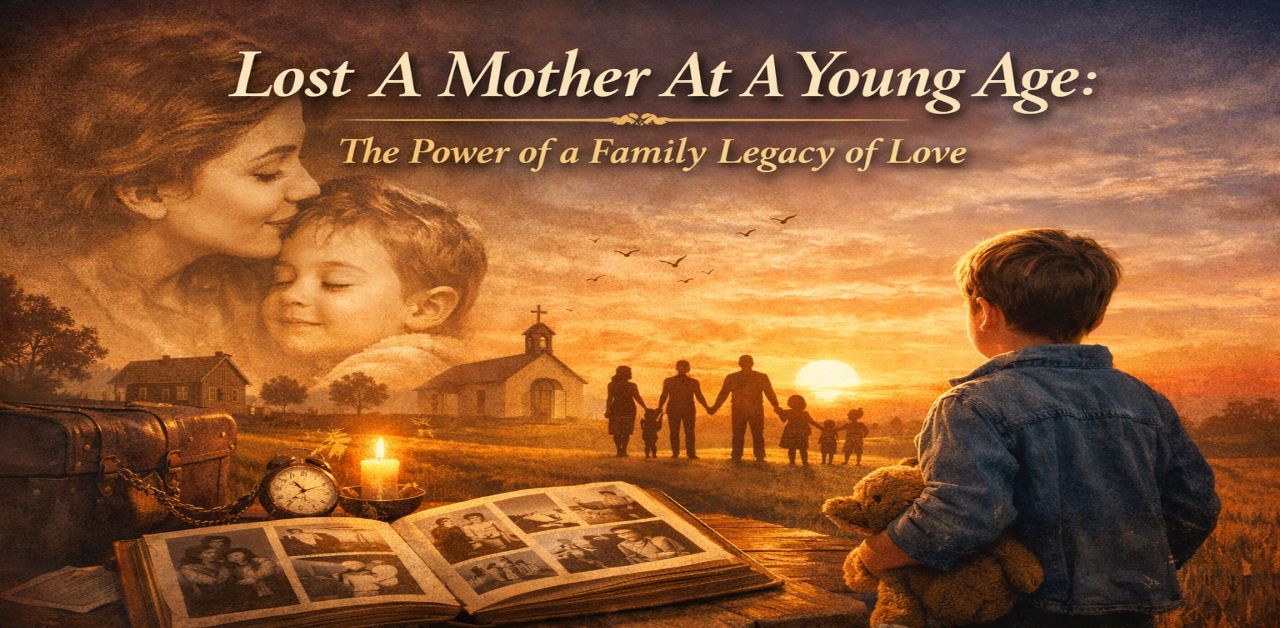
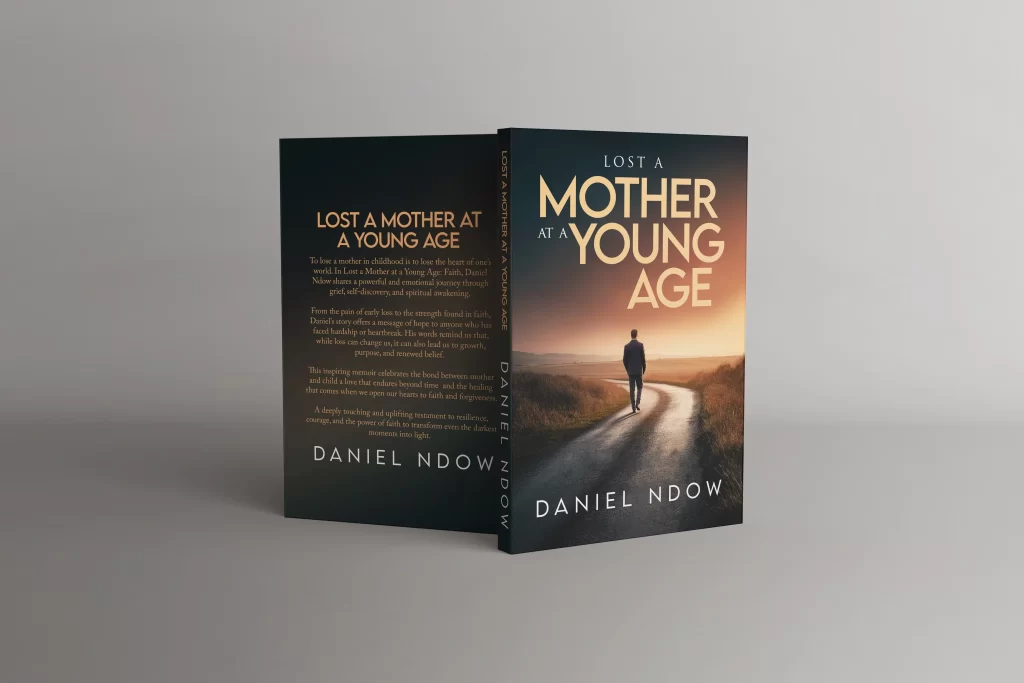
The memoir Lost a Mother at a Young Age: Faith recounts Daniel’s experience of losing his mother at a young age and his journey through grief, faith, and self-discovery. A story of love and family, of tradition and modernity, marked by encounters and missed connections. A family legacy of love and a portrait of love in its many layers, with sacrifices and choices, with all the fragility it entails. And in this story, loneliness also emerges.
Lost a Mother at a Young Age highlights the importance of the family legacy of love and the enduring bond between mother and child. Through these pages, we explore love, as well as displacement, loss, and miscommunication—emotions that permeate the lives of characters from different generations. Yet the story offers hope and inspiration, showing how resilience and faith can transform even the deepest pain into growth and renewed purpose.
Today, in a globalised world, the questions are different: Why this person and not someone else? Why here and not somewhere else?”
The Importance of Integrating Our Family Legacy into Who We Are
In an intricate interplay between past and present, the family legacy of love immerses you in a vibrant universe of mystery, danger, and passion, enveloping the protagonists in a whirlwind of secrets and ruthless ambitions. InLost a Mother at a Young Age, what lay buried for generations resurfaces powerfully in this novel, where belonging to a lineage shapes the future, while a bond between mother and child represents the triumph of love despite the obstacles.
Who we are is made up of different layers, nuances, and memories.
Many of these come from characteristics inherited from our family and ancestors. Every person who came before us passed on something of themselves—whether light or shadow—and that’s why it’s not uncommon for our family or acquaintances to say, “You look like your grandfather” or “That’s how your father was,” even when we didn’t know or spend much time with that person.
Recognising our history, our wounds, and what we like or dislike about our ancestors is essential. Whether we like it or not, we come into this world carrying pain, trauma, blockages, and unfinished stories that didn’t begin with us. They belong to us as a legacy, but not as our own creation.
Why Does Family Legacy Of Love Matter?
Healing, understanding, exploring, and forgiving them is not a punishment; it is an act of love and responsibility.
But integrating our legacy doesn’t mean focusing solely on the pain or the patterns that have been repeated for generations. The family legacy of love also involves recognising everything that sustained us: the strengths, the values, the quiet efforts that brought us here. Each member of our family, with what they had available, did their best to move forward, to give something better than what they received. We are the result of a long, complex, and courageous journey that deserves to be honoured.
When we don’t stop to look at ourselves, something inevitable happens: without realising it, we tend to reproduce the lives of our parents or those who raised us, just as they repeated, without question, what was given to them by their own parents. However, receiving their gifts, their wounds, and their lessons doesn’t define us completely. Recognising all of that—what hurts us and what strengthens us—allows us to see clearly, unleash our true potential, better care for those we love, and find a purpose that truly fulfils us.
Knowing ourselves involves questioning every aspect of our lives. It means consciously working to improve them, to align them more and more with what our soul truly desires. Listening to our soul is listening to the purest part of ourselves as human beings.
Integrating our legacy is honouring who we were, who we are, and those who are yet to come.
One of the methodologies that works directly with integration in the family legacy of love is to see hidden dynamics within the family system that affect us, often unconsciously. Through symbolic representations, constellations help us recognise repetitive patterns, inherited emotional burdens, and broken bonds, so we can release, organise, and heal them. It’s not about blaming anyone, but about seeing what happened with compassion, understanding our place in history, and drawing strength from our roots to move forward with greater freedom.
Build a legacy that impacts at least three generations.
Thinking generationally means living with the generation that will rise after us in mind. It means running the race, calculating each move to hand over the baton at the right time and in the best way to make them winners. It means building a family legacy of love that we can leave to our children and grandchildren, one that transcends even after we are gone, and that is not just about material possessions.
- A legacy is the result of a process, of shared time and deep relationships. It is what we sow in the new generation, the mark we leave as a footprint that distinguishes those who bear our name. We inherit it through consistent, daily effort, with much sacrifice and a strong sense of destiny.
- A bad legacy will limit our children’s and grandchildren’s ability to respond assertively to life. A good legacy will prepare them for challenges and equip them to face difficult times.
- A bad legacy will bequeath a domino effect of negative consequences. If we don’t make decisions with a generational perspective, some of their consequences may negatively affect our children and grandchildren.
Without a family legacy of love, there is no path to guide new generations. Those who leave a legacy in their children’s hearts define a path, a vision, a set of values, and an identity that will help them be less likely to get lost in a world full of distractions.
A Legacy That Leaves a Mark
Think about your next generation. Imagine their faces. Who are the heirs of your legacy? Think about those who will shout from the doorway, “You’re here paving the way for me,” and ask yourself… “Where do you want to leave them?”
You were called to leave a legacy that transcends generations. Read Lost A Mother At A Young Age.